


Marisa M Silveri
What inspires or motivates you in your role at HMS/HSDM?
Over the past two decades, I have been dedicated to studying the brain, motivated by the critical need to alleviate pain and suffering associated with addiction and mental illness. The focus of my work has largely been on adolescence - the second decade of life - a crucial time of brain maturation and improved functional abilities, which overlap with initiating alcohol and drug use, and manifestation of psychiatric conditions. At McLean Hospital, I direct the Neurodevelopmental Laboratory on Addictions and Mental Health, where we employ a multifaceted approach, combining cutting-edge neuroimaging technologies, neuropsychology and clinical assessment to acquire novel data that will influence diagnosis and treatment of psychiatric illnesses. I am inspired by the power of the scientific method and the ability of research investigations to reliably probe the neurobiological underpinnings of mental wellness and illness. I also am a proud contributor to the ongoing world-class research at HMS, aimed at improving our knowledge on the fragilities of the human condition.
Are there activities outside of your job at Harvard that you feel enrich or inform who you are as an individual at Harvard?
At Harvard, I am an active member of the HMS community, a scientist, mentor and educator, and an advocate of diversity. Outside of HMS, I dedicate significant effort to local, regional and national community outreach, as an interpreter of neuroscience for parents, students, educators, clinicians, law enforcement and policy makers. Presentations on neurobiological vulnerabilities of the adolescent brain serve to discourage adolescent alcohol and drug use, and provide education on the importance of identifying early indicators of psychiatric illness. Community responses to my presentations are an invaluable source of input that, reciprocally, serves to guide our research investigations.
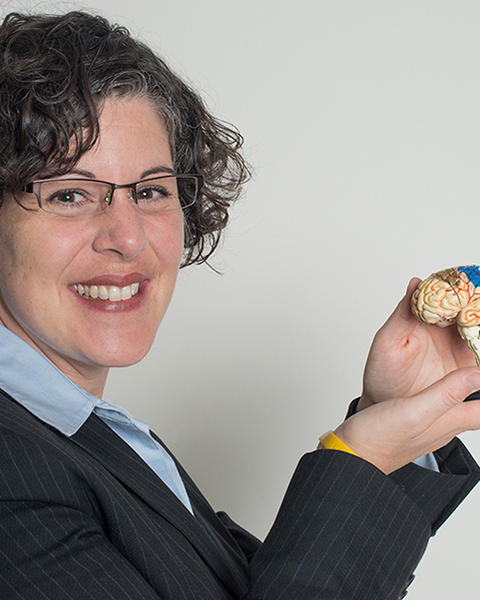
What is the significance of the object you brought with you to the photo shoot?
I am holding a neuroanatomical model of the human brain, which is the foundation of my research investigations. Proportionally only a small component of the entire human body, the brain is both the most complex and the least understood organ.