


Roberto Colter
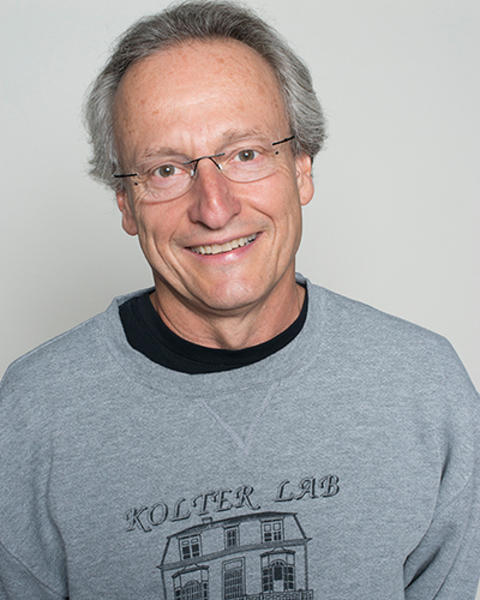
In what ways do you feel you contribute to the Harvard community?
Community building is something that happens slowly. So, all of our everyday activities -- some of which might appear mundane and inconsequential the moment they occur - will have an effect on community. In that regard, I believe that working over thirty years with people from all over the University, and across all ranks, has contributed to what Harvard is today. One example that I feel very close to has been the Microbial Sciences Initiative. That started some fifteen years ago as a weekly breakfast that brought together a few professors to discuss diverse aspects of microbes. Now, the Microbial Sciences Initiative brings together several hundred individuals from nearly every school of the University to form a vibrant community that I love to oversee.
What are you most proud of about your work at HMS/HSDM?
In more than thirty years of directing a basic science laboratory I have had the good fortune of training well number that I am proud of: I am proud of their individuality and of the laboratory environment that has helped foster that individuality. I look back and feel very fortunate to have had the opportunity to serve those individuals in a way that they were able to follow their passions. I look at where this has led each one of them and I feel extremely happy.
What is the significance of the object you brought with you to the photo shoot?
The "Kolter Lab Maine Event" is a unique tradition. Not too many labs that I know of can claim to have such a tradition: Once a year, for one entire week, we abscond ourselves to the William Dean Howells House in Kittery Point, Maine simply to discuss our work. No one else there but us, we live in community. Leaving all the hustle and bustle of our daily lives we have ample time to think, to discuss, to brainstorm. In many ways, that week defines our research directions for the year and beyond.